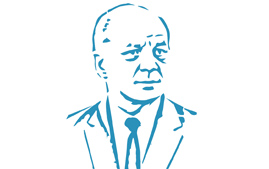
Head of Division - Dr. D.N. Aristov
Theoretical Physics Division (TPD) consists of six departments:
and the Group of Nuclear Reactor Theory (headed by Dr. M.S. Onegin).
About the Division
Theoretical physics is a unified field of science with common methods, approaches, and criteria. Most of the discoveries made in physics over the past few decades were predicted in advance based on a theoretical analysis of previous experiments. The research carried out at the TPD covers most areas of modern theoretical physics – from elementary particle physics and quantum field theory to thephysics of nuclear reactors.
The TPD emphasizes close collaboration among theorists from various fields: joint research projects are conducted, and joint seminars and workshops are held. International conferences on hadron structure and the Euler Symposium on Theoretical and Mathematical Physics are held regularly.
The main areas of research conducted by TPD staff include high-energy physics and particle physics, nuclear physics, condensed matter physics, atomic physics, and environmental physics. По этим направлениям отделение теоретической физики занимает лидирующие позиции в мире и пользуется большим международным авторитетом.
Vladimir Naumovich Gribov (1930–1997), the founding father of of Theoretical Physics Division, made seminal contributions that form the foundation for describing high-energy hadron collisions. The Gribov–Froissart representation for scattering amplitudes is named after him. He formulated the problem of gauge copies in non-Abelian theories (Gribov copies).
The division’s staff have made a decisive contribution to the theory of hard and diffractive processes. Most of the authors of the world-renowned equations of evolution—DGLAP (Dokshitzer, Gribov, Lipatov, Altarelli, Parisi) and the BFKL (Balitsky, Fadin, Kuraev, Lipatov)—as well as the DDT formula (Dokshytser, Dyakonov, Troyan), worked at the Theoretical Physics Division.
The work of A.G. Aronov and B.L. Altshuler on the theory of weak localization in doped semiconductors has gained worldwide recognition. The theory of polarized neutron scattering in matter, developed by S.V. Maleev and his co-authors, marked the beginning of an entire field of experimental research.
In his work, Y.V. Petrov proposed a fundamentally new design for a high-flux research reactor, which was implemented in the design and construction of the PIK reactor. Research on the Oklo natural nuclear reactor, which was active in Gabon approximately 1.5 billion years ago, has provided some of the most stringent limits on the variation of fundamental constants over time.
The TPD conducts research on fundamental phenomena in the theory of strong interactions, such as quark confinement, spontaneous chiral symmetry breaking, the confinement-deconfinement phase transition, and the properties of hadrons. The instanton and dion models of the vacuum, as well as the quark-soliton model of baryons, proposed in the TPD, provide a qualitative and quantitative understanding of the fundamental characteristics of these phenomena.
The TPD can be considered one of the world leaders in the study of AdS/CFT correspondence between field and string descriptions, which is currently the most important tool in strongly coupled quantum field theory. At the TPD, the integrability of this conformal field theory was discovered and proven at all orders of perturbation theory.
The classification of hadrons is a pressing issue, and within this context, researchers at the Theoretical Physics Division have developed, for the first time, a method for the combined partial-wave analysis of experimental data. This made it possible not only to determine the properties of hadrons but also to discover a number of new states that were included in the Particle Data Group tables.
String models are the leading candidates for a theory of unification of all interactions. The Division developed a method for constructing multi-loop string diagrams. A string model has been proposed that realistically describes hadrons at low and intermediate energies.
Currently, the TPD conducts studies into the properties of nuclear matter at high densities, which is of great relevance to research on neutron stars.
A relativistic theory for light emission and absorption by atoms is being developed, which is necessary for understanding the spectra of multicharged ions and X-ray spectra in heavy atoms. An experiment using the helium-like ion of europium was proposed to verify the Standard Model at low energies.
Staff of the TPD performed the calculations necessary for the preparation and execution of the physical startup of the PIK reactor. A new cross-sectional shape for a fuel element has been patented; its properties make it possible to increase the reactor’s power density, thereby boosting neutron fluxes and reducing the risk of damage during an uncontrolled power surge.
Since the formation of the condensed matter theory sector, three directions have developed in it: the theory of ordered magnets, the theory of disordered systems, and the theory of semiconductor physics.
Currently, most of the work is devoted to the theory of magnetism, including magnetic phenomena in strong fields, transport and magnetic properties of single crystals, and the theory of magnetic phenomena in high-temperature superconductors. There is close cooperation with experimental scientists in this field. A new area of research involves the study of low-dimensional nanostructures, particularly quantum wires and layered systems, as well as promising materials such as graphene.
Another interesting field is environmental physics. The theoretical description of dynamic processes associated with phase transitions in the Earth's atmosphere is the main problem of the modern theory of atmospheric hydrodynamics. In the field of condensation-induced atmospheric dynamics, V.G. Gorshkov et al. have obtained new findings regarding the description of hurricanes and tornadoes.
The Division works closely with many international experimental collaborations. The results produced by TFD play a significant role in describing the processes studied at the Large Hadron Collider (CERN) and at other international experimental laboratories. The model was developped at the TPD that combines diffractive and rigid-body-like processes to describe CERN experiment results.